News
In today's digital economy, most commercial transactions and commitments occur via email, messaging, or internal systems. Under the Law on Commercial Arbitration 2010, electronic data does not automatically hold value; it must meet strict standards for authenticity and verifiability.
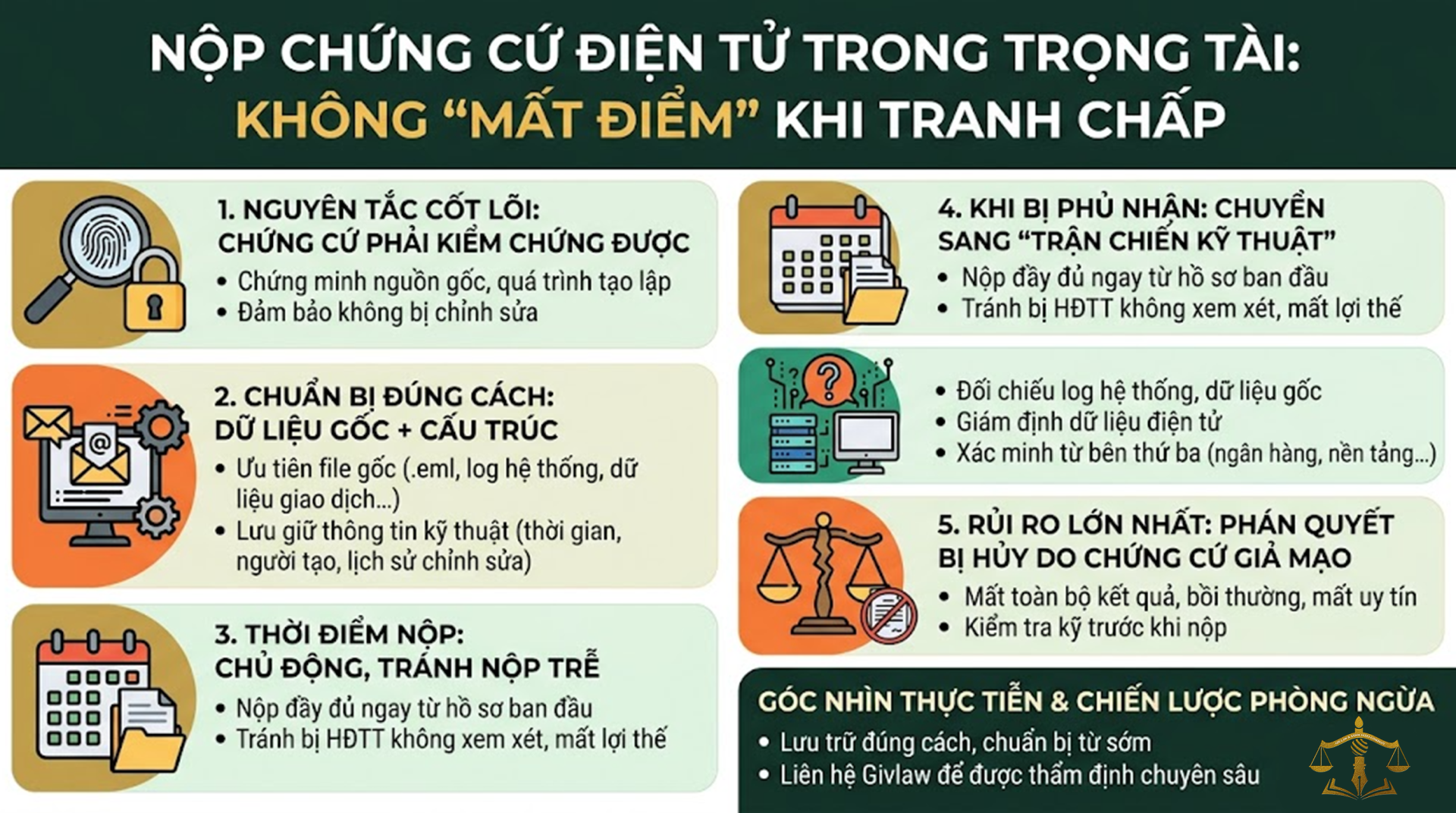
Electronic evidence is only accepted by the Arbitral Tribunal if its origin, creation process, and integrity are proven.
Proof of Origin: It is essential to clarify who created the data and when it was established.
Integrity: The data file must remain unaltered and free from technical interference.
Screenshot Limitations: Disconnected screenshots are often viewed as weak evidence unless accompanied by original metadata for cross-checking.
Businesses should establish professional storage structures from the start of a transaction to mitigate risks.
Retain Original Formats: Prioritize files such as .eml emails, system logs, or direct transaction data from software.
Technical Information: Store details regarding timestamps, IP addresses, creators, and edit history.
Evidence Mapping: Create a descriptive table linking each piece of evidence to specific disputed events to increase persuasiveness.
The Law on Commercial Arbitration 2010 mandates that parties provide evidence to support their claims. Late submissions can result in:
The Tribunal refusing to consider overdue evidence.
The opposing party gaining more time to formulate a rebuttal.
Recommendation: The safest approach is to submit comprehensive and rigorous evidence with the initial filing.
If the opposing party denies authenticity, the focus shifts to technical verification:
Cross-reference original data with system logs.
Request professional forensic analysis of digital data.
Seek verification from third parties, such as banks or digital platform providers.