News
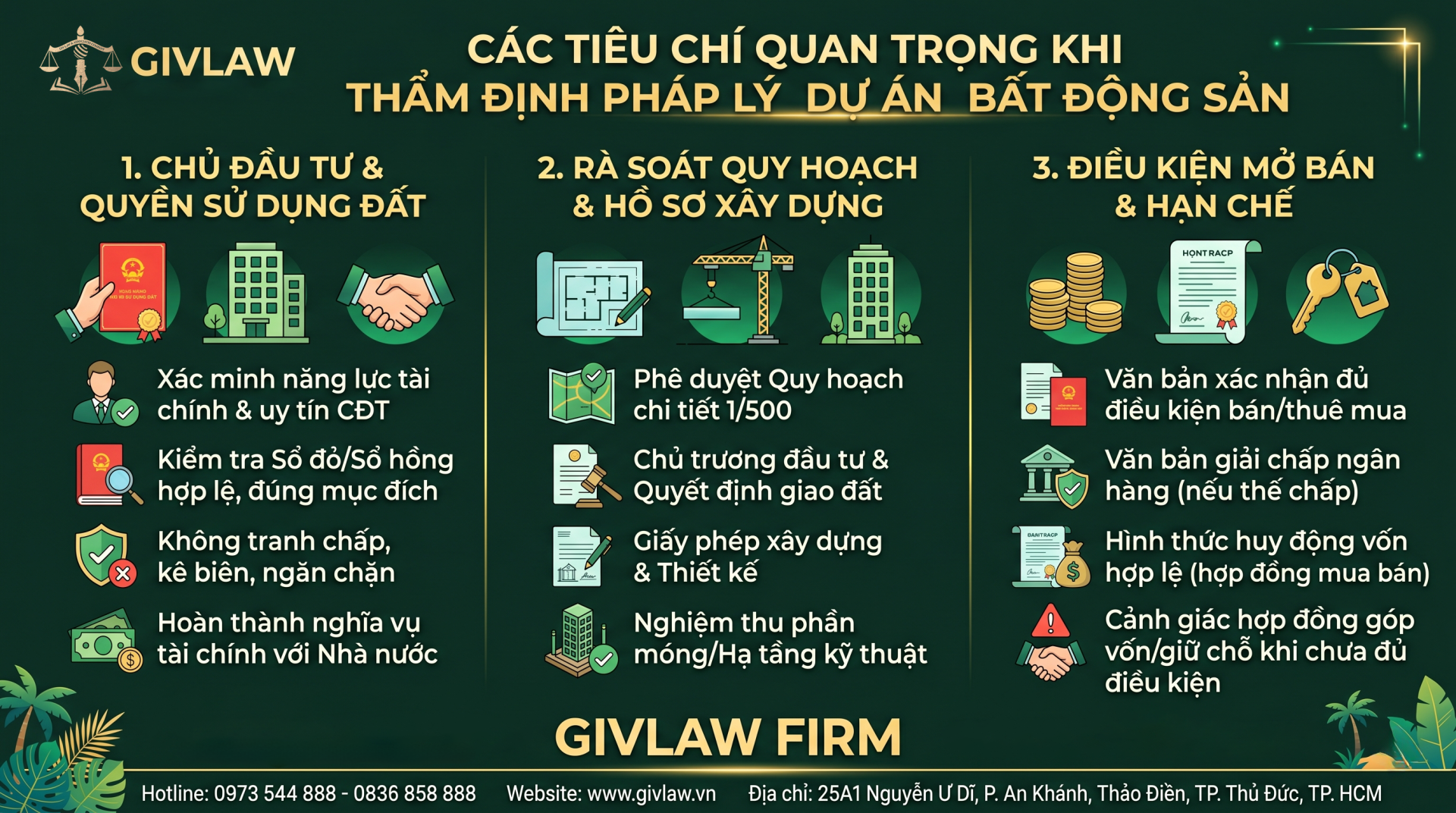
In real estate project investment, glamorous perspectives and profit promises are merely the tip of the iceberg. The core factor determining the safety of an investor's capital is the legal foundation. A minor oversight in due diligence can lead to frozen capital or, worse, total loss of assets.
Below are the 03 essential criteria that the experts at Givlaw Firm prioritize when conducting legal assessments for our clients.
This is the foundational step for any transaction. Investors must clearly identify the legal status and land ownership of the implementing entity:
Developer Capacity: Verify business registration, reputation, and actual financial strength. The developer must demonstrate the capability to execute the project until final handover.
Land Use Rights: The project must possess a valid Land Use Rights Certificate, comply with the correct land use purpose, and not be subject to disputes, distraint, or any preventive measures.
Financial Obligations: Confirm that the developer has fulfilled land use fees and related taxes. This is a mandatory condition for buyers to be issued Ownership Certificates (Red Books/Pink Books) in the future.
Design and planning records are the legal basis for the project to be established in accordance with the law:
1/500 Detailed Planning: There must be an approved decision for the 1/500 detailed planning. This defines the technical parameters regarding construction density and amenities that the developer must adhere to.
Construction Permit: Verify that the project has been granted a construction permit and accompanying design records (except for cases exempted by law).
Acceptance Minutes: For apartments, the project must have minutes of foundation acceptance. For other projects, corresponding technical infrastructure acceptance minutes are required before entering the market.
To ensure that capital is invested correctly, the project must reach a state of legal readiness for transaction:
Confirmation of Sales Eligibility: For future-formed housing, the developer must obtain a written confirmation of eligibility for sale from the local Department of Construction.
Mortgage Status: It is necessary to check whether the project is currently mortgaged at a bank. If so, a release document or written consent from the bank allowing the sale of those assets is required.
Fundraising Forms: Be cautious with capital contribution, reservation, or deposit contracts when the project has not met legal conditions, to avoid the risk of the transaction being declared void.