News
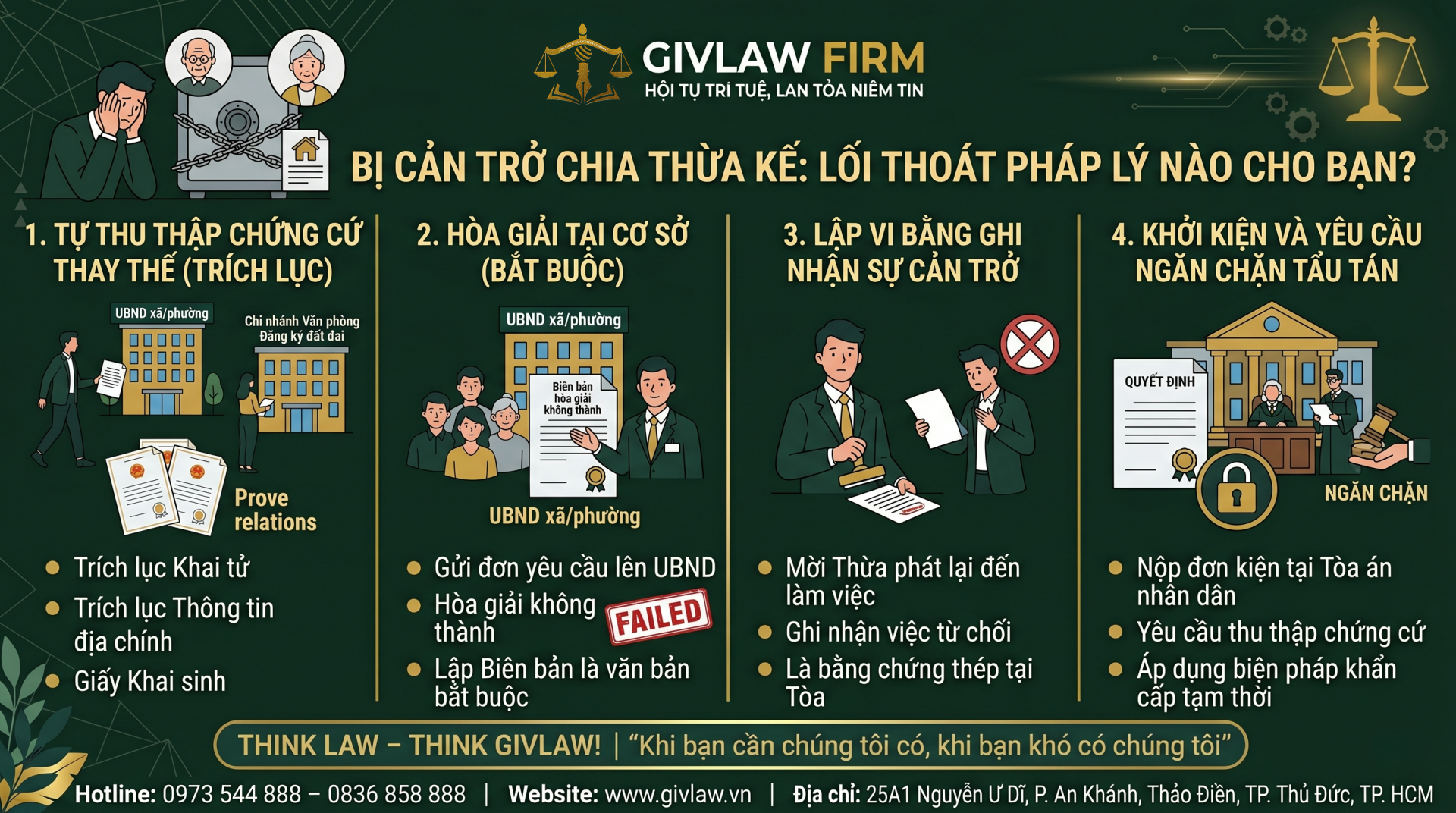
A frequent issue in inheritance disputes occurs when one heir withholds original documents, such as the Land Use Rights Certificate (Red Book) or Death Certificates, to block the distribution of the estate.
At Givlaw, we emphasize that: Holding original documents does not grant an individual total authority over the assets. Below is the legal roadmap to protect your legitimate inheritance rights.
If the person in possession refuses to provide originals, you have the right to collect these documents from State agencies. Certified extracts carry the same legal weight as originals in court proceedings:
Death Certificate: Contact the local People's Committee (UBND) where the deceased last resided for a Certified Extract of Death.
Land Records: Contact the Land Registry Office to obtain Cadastral Information Extracts and records of land origin.
Identity Papers: Prepare birth certificates of all heirs to prove the first line of inheritance.
By law, land disputes must undergo conciliation at the local UBND where the property is located before a lawsuit can be filed.
If the party in possession refuses to cooperate or conciliation fails, the UBND will issue a Minute of Unsuccessful Conciliation, a mandatory document for the Court to process your lawsuit.
To strengthen your case, you may hire a Bailiff to document the situation. A Bailiff’s Record (Vi Bang) objectively records the other party's refusal to provide documents or their interference with your inheritance rights, serving as strong evidence in court.
If negotiations fail, you must file a lawsuit for "Division of Inheritance Estate" at the People's Court where the property is located.
Request Court-ordered Evidence Collection: You have the right to request the Court to compel the person in possession to surrender the originals or order relevant agencies to provide records for the trial.
Applying for Interim Measures: Request the Court to issue a decision freezing all transactions and preventing any changes to the status of the asset to ensure the estate is not liquidated or disposed of during the litigation process.